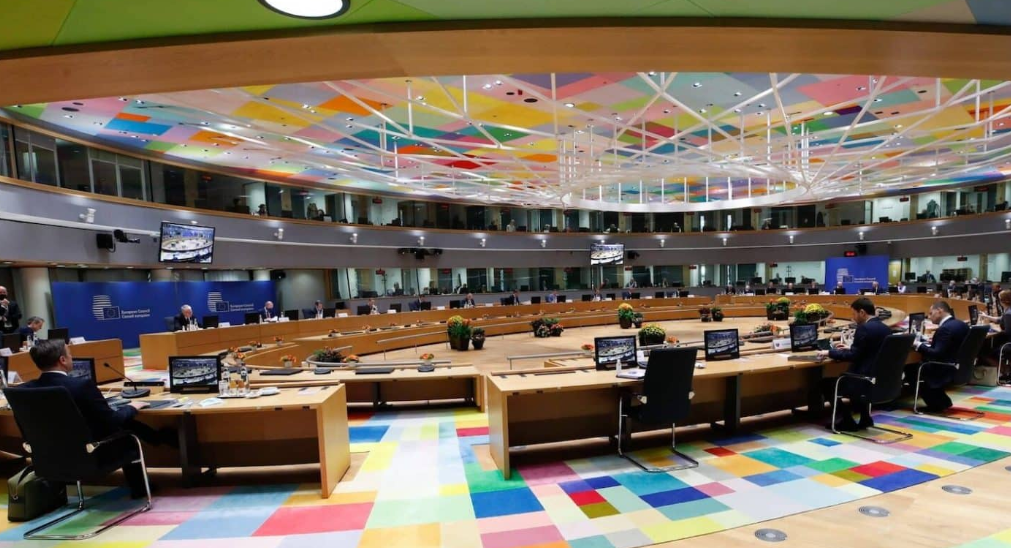
The European Council approved the Net Zero Industry Act (NZIA) on Monday. Its objective is to reduce greenhouse gas emissions in the European Union (EU), but above all to increase the production of green technologies on the continent.
This new law aims to produce 40% of the EU’s green technologies by 2030. A total of 19 technologies are covered, including solar, wind, nuclear, and carbon capture. Brussels hopes to reach 15% of global production by 2040.
Two main measures are needed to achieve these objectives. The first is to simplify and streamline the permitting process for projects in these areas. The second aims to encourage Member States to move beyond purely price-based criteria. They will be able to consider the resilience and sustainability of bids in up to 30% of tenders.
This is a response to competition from the United States and China in these sectors. With the Inflation Reduction Act (IRA) , the Biden administration has allocated $369 billion in support for green industries over 10 years. This plan carries the risk of encouraging European companies to relocate across the Atlantic.
For its part, China has dominated the solar panel market for several years. Of the €22.6 billion worth of solar panels imported by the EU, 96% come from China, according to figures published by Le Monde . European manufacturers, the few remaining, supply less than 3% of the continent’s installations. While the situation is better for wind turbines, Chinese companies are also eyeing this market.
Without funding and relying primarily on incentives, the European regulation appears timid in the face of the challenges ahead. The text must now be ratified by the President of the Parliament and the Council before being published in the Official Journal of the EU in the coming weeks.

Leave a Reply