This episode is available on streaming platforms .
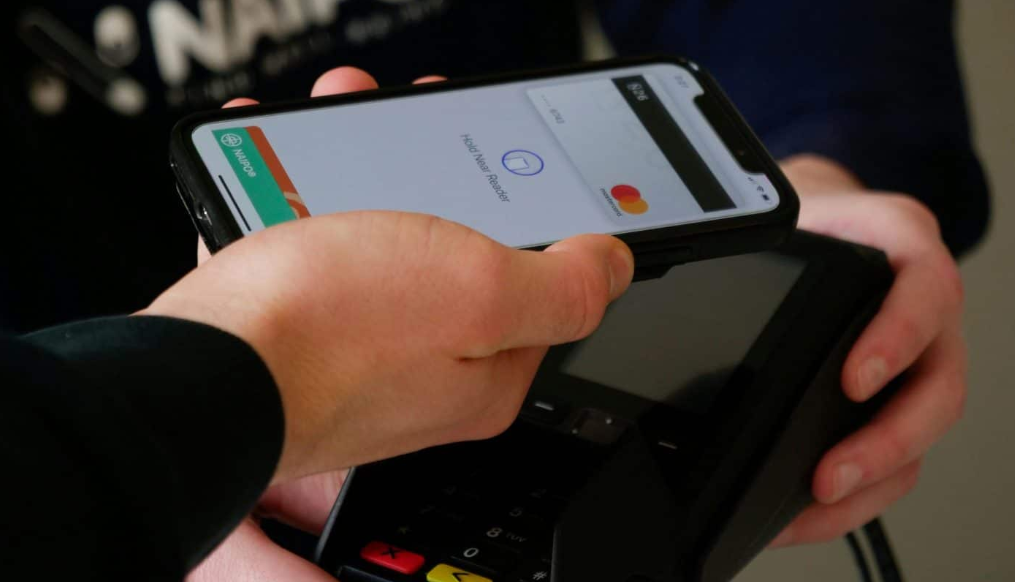
The various fees applied after a credit card payment are borne by the merchant. These fees are often unknown, but have significant implications: lack of transparency, the final prices paid by customers, increased costs… Cards still account for 50% of payments in France. Siècle Digital discussed this with Pascal Cotte, Managing Director for France and new markets at the Italian fintech company Satispay.
“There is a need for absolute transparency” regarding bank fees
These numerous fees are generally unknown to the public. Worse still, according to a YouGov study for Satispay, 69% of merchants surveyed have no clear idea what these fees are. 11% reportedly have no idea at all, despite their significant impact on costs.
There are three types of fees. The first are network fees. These are the fees charged by Mastercard, Visa, or Carte Bancaire, applied in exchange for using their card networks.
Interchange fees represent the second category. ” If you are French and you use a debit card hosted in an Italian bank, you are not going to pay the same fees as an Italian who uses a card hosted in a French bank ,” summarizes Pascal Cotte.
The last ones are bank fees, charged by the merchant’s bank. All these fees, without exception, are paid by the merchant when a customer pays by card. ” In the end, it makes three layers of fees, which we don’t really understand, and which represent between 3% and 4% of the total amount charged to the merchant at the end of the year ,” says the managing director for France at Satispay.
According to him and the YouGov study, the main issue behind these charges is transparency: ” I believe there is an absolute need for transparency ,” he explains. One solution for greater transparency lies, for example, in reducing the number of intermediaries.
This is one of the core principles of Satispay, a leading mobile payment company in Italy. It also allows this trusted third party to reduce fees and maintain them at a consistent level over several years.
Regarding these fees and the complexity surrounding them, Pascal Cotte explains: ” when the credit card arrived, it was necessary to set up an ecosystem enabling dematerialized payment, with the implementation of infrastructures: by banks, operators such as Visa, card issuers and acquirers .”
Numerous elements represent ” a number of tolls .” Customer loyalty is another issue. Fees have increased recently, particularly at Visa and Mastercard, officially due to inflation.
The risk then is that retailers will pass these increases on to the final prices of their products, which are paid by consumers. Unaware of these costs, consumers may simply assume that the retailer is raising prices, thus undermining customer loyalty.
“ Today our merchants tell us several things. One: I don’t understand what I’m paying for. Two: It’s very important for me to understand it. Three: I’m ready to change payment solutions if they offer me something more than just the ability to collect payments, particularly in terms of customer loyalty ,” concludes Pascal Cotte.
Leave a Reply