Category: Blog

Your blog category

  • Taiwan’s new government confirms it can remotely halt semiconductor manufacturing in the event of a Chinese invasion.

    Taiwan’s new government confirms it can remotely halt semiconductor manufacturing in the event of a Chinese invasion.

    If necessary, Taiwan has the means to shut down all 
    semiconductor manufacturing equipment supplied by the European company ASML. This information was confirmed by Wu Cheng-wen, the island’s new administration’s Minister of Technology, in response to a question from a member of parliament. This statement comes amid heightened tensions with China.

    The expression “Silicon Shield,” coined by American journalist Craig Addison in the early 2000s, takes on its full meaning. It summarizes the idea that Taiwan is so central to supplying the entire planet with semiconductors 
    that it is protected from an invasion by its large neighbor .

    Taiwanese political figures, notably former president Tsai Ing-wen of the Democratic Progressive Party (DPP), known for its pro-independence stance, have adopted the phrase. It has become increasingly prominent in the public consciousness as China threatens the island with a blockade, or even worse, more than ever before.

    Following the inauguration of Tsai Ing-wen’s successor, Lai Ching-te, also a member of the DPP, the People’s Liberation Army (the Chinese military) began military exercises. These maneuvers, codenamed “United Sword 2024A,” literally encircle Taiwan. They are openly presented as retaliatory measures against the new president, portrayed as a ”  dangerous separatist  .”

    The United States, which is closely monitoring events, has expressed particular concern about the consequences of an invasion for the semiconductor industry. According to Bloomberg , contacts have been established with Taiwan and the Netherlands on this matter.

    The European country is home to ASML , the company that holds a monopoly on extreme ultraviolet (EUV) lithography machines. These are the most advanced manufacturing tools available, enabling the production of high-tech chips. Since their introduction to the market in 2019, ASML has been banned from selling them in China . Conversely, the largest customer for these bus-sized devices is none other than the Taiwan Semiconductor Manufacturing Company (TSMC) .

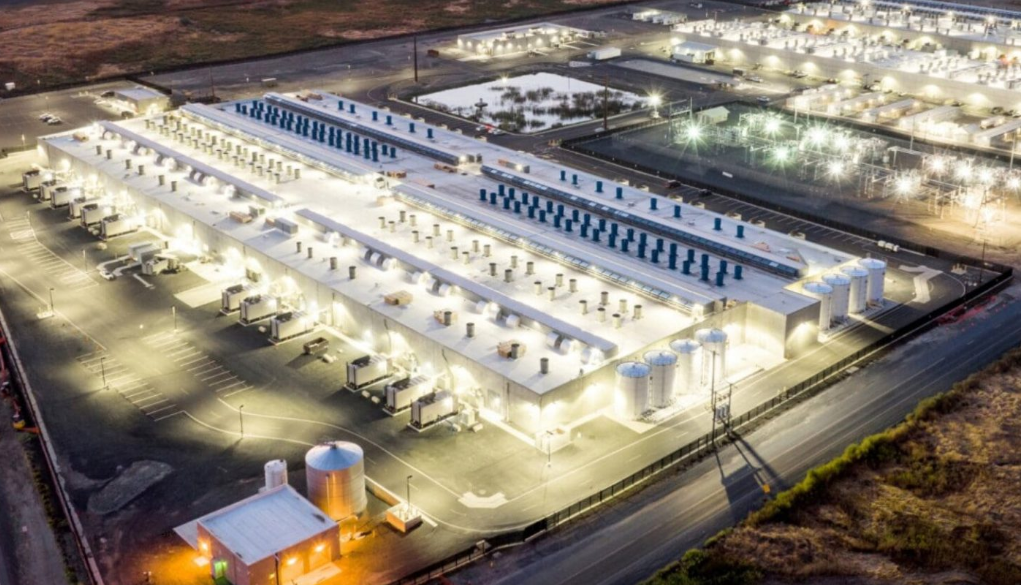
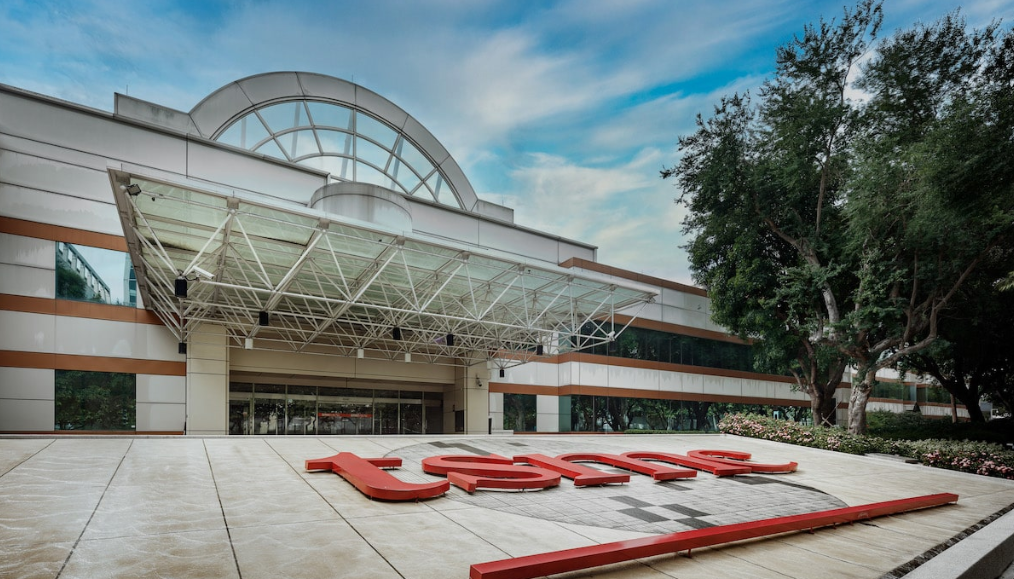
    TSMC is the world’s largest contract semiconductor manufacturer. The company supplies more than 90% of the advanced chips in circulation and 99% of AI accelerators, according to one of its senior executives. While the group has begun a strategy of diversifying its production locations in response to various laws supporting the establishment of chip factories , these facilities currently remain primarily located in Taiwan.

    Minister Wu Cheng-wen confirmed the possibility of a circuit breaker for EUV machines, stating that ”  according to current smart chip manufacturing technology, this is feasible  .” The Netherlands reportedly met with ASML to discuss this scenario, and simulations were allegedly conducted.

    The idea of ​​the “Silicon Shield”, which is an addition to Taiwan’s overall defense strategy, is to make the cost of an invasion far too high for China and thus deter it from resorting to such an extreme measure.
  • Xavier Niel could fully acquire the Luxembourg operator Millicom

    Xavier Niel could fully acquire the Luxembourg operator Millicom

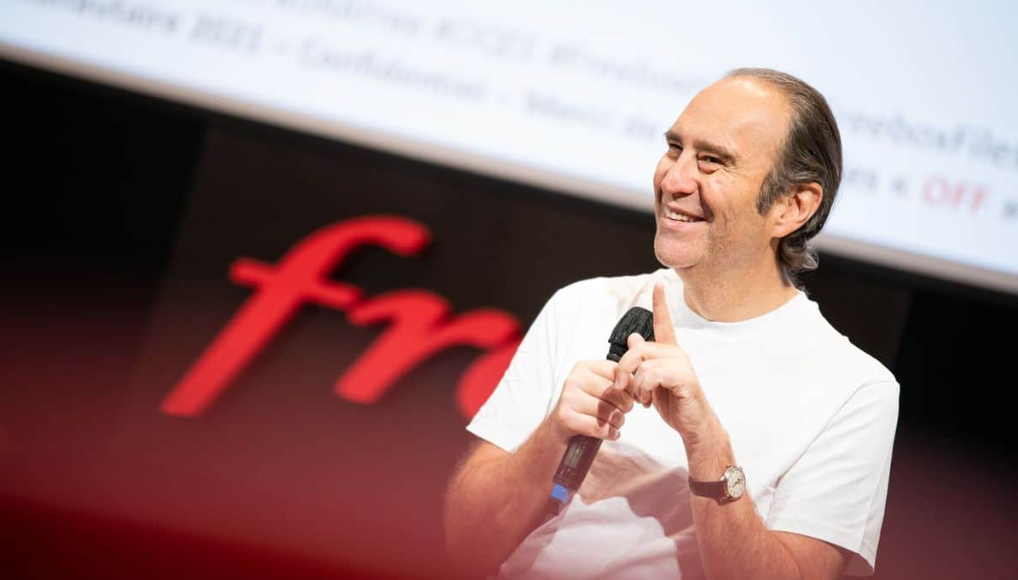
    Atlas Investissement, the investment vehicle of French billionaire Xavier Niel, is preparing to acquire Millicom, a Luxembourg-based mobile phone operator, according to a statement released Thursday. The deal would value the company at $4.1 billion.

    Millicom, a good financial bet

    It all began in November 2022, specifically on the 5th. That day, Atlas Investissement announced the acquisition of a 7% stake in Millicom. In February 2023, the company announced an increase in its share to 20%. Today, Atlas Investissement has become the majority shareholder, holding 29%. A complete buyout seems the logical next step.

    Through its TIGO brand, Millicom provides fixed and mobile telephone services in Latin America. The company is publicly traded in the United States, where its market capitalization reached $3.54 billion in February 2023. At that time, it claimed to have 20,000 employees.

    In 2022, its sales reached $5.62 billion, up 3.3%, with an operating margin of $915 million. Last year, its revenue reached $5.6 billion. According to a statement from Atlas Investissement, discussions regarding a takeover are only in the preliminary stages.

    The focus now seems to be primarily on exploring financing options. Atlas’s goal is reportedly to support a $24 per share offer for Millicom. Millicom’s shares have also risen 33% since the beginning of the year. Following the announcement, they increased by 2.3% in New York.

    Xavier Niel is expanding his empire to Latin America

    Its board of directors confirmed receiving an expression of interest from Atlas. However, Atlas Investissement indicated that it remains possible no concrete offer will be submitted. This is especially true given its potentially high debt level, which could be an obstacle.

    However, beyond these respectable financial results, it is its presence in Latin America that should attract Xavier Niel . By acquiring Millicom, Atlas Investissement would almost double its number of clients.

    The operator has 45 million subscribers in Latin America through its TIGO brand. Atlas, for its part, has 50 million subscribers, spread across nine European countries.

    When the head of Free acquired a stake in Millicom, the latter became a target for Apollo Global Management. Discussions for a takeover were even initiated, before being abandoned.

    It should be noted that Maxime Lombardini became the new director of Millicom this Thursday. Between 2007 and 2020, he successively served as CEO, Chairman of the Board, and then Vice-Chairman of the Board of Iliad , a group founded by Xavier Niel.

  • Payment fees at retailers: a major economic issue

    Payment fees at retailers: a major economic issue

    This episode is available on streaming platforms .

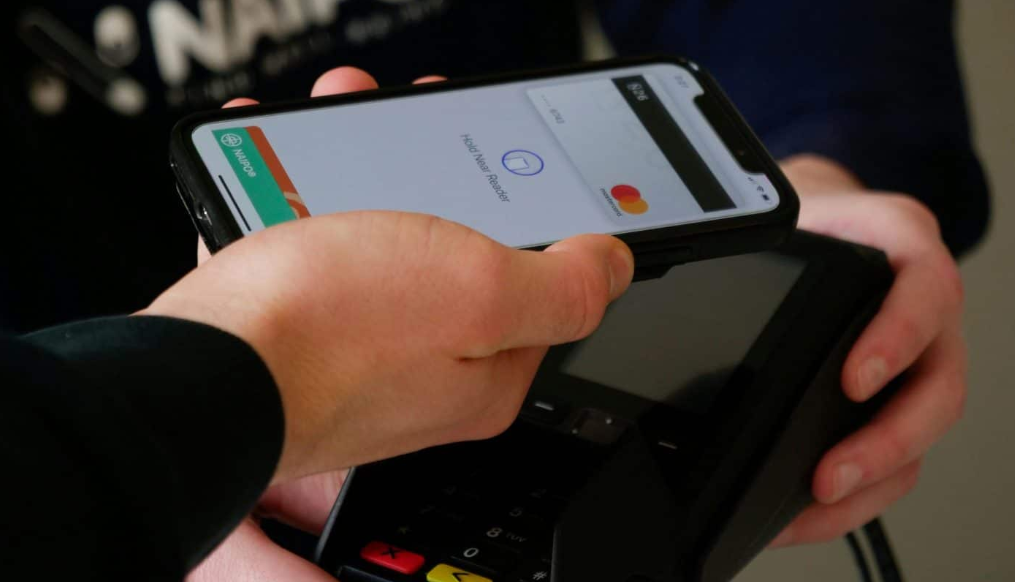
    The various fees applied after a credit card payment are borne by the merchant. These fees are often unknown, but have significant implications: lack of transparency, the final prices paid by customers, increased costs… Cards still account for 50% of payments in France. Siècle Digital discussed this with Pascal Cotte, Managing Director for France and new markets at the Italian fintech company Satispay.

    “There is a need for absolute transparency” regarding bank fees

    These numerous fees are generally unknown to the public. Worse still, according to a YouGov study for Satispay, 69% of merchants surveyed have no clear idea what these fees are. 11% reportedly have no idea at all, despite their significant impact on costs.

    There are three types of fees. The first are network fees. These are the fees charged by Mastercard, Visa, or Carte Bancaire, applied in exchange for using their card networks.

    Interchange fees represent the second category. ” If you are French and you use a debit card hosted in an Italian bank, you are not going to pay the same fees as an Italian who uses a card hosted in a French bank ,” summarizes Pascal Cotte.

    The last ones are bank fees, charged by the merchant’s bank. All these fees, without exception, are paid by the merchant when a customer pays by card. ” In the end, it makes three layers of fees, which we don’t really understand, and which represent between 3% and 4% of the total amount charged to the merchant at the end of the year ,” says the managing director for France at Satispay.

    According to him and the YouGov study, the main issue behind these charges is transparency: ” I believe there is an absolute need for transparency ,” he explains. One solution for greater transparency lies, for example, in reducing the number of intermediaries.

    This is one of the core principles of Satispay, a leading mobile payment company in Italy. It also allows this trusted third party to reduce fees and maintain them at a consistent level over several years.

    Regarding these fees and the complexity surrounding them, Pascal Cotte explains: ” when the credit card arrived, it was necessary to set up an ecosystem enabling dematerialized payment, with the implementation of infrastructures: by banks, operators such as Visa, card issuers and acquirers .”

    Numerous elements represent ” a number of tolls .” Customer loyalty is another issue. Fees have increased recently, particularly at Visa and Mastercard, officially due to inflation.

    The risk then is that retailers will pass these increases on to the final prices of their products, which are paid by consumers. Unaware of these costs, consumers may simply assume that the retailer is raising prices, thus undermining customer loyalty.

    “ Today our merchants tell us several things. One: I don’t understand what I’m paying for. Two: It’s very important for me to understand it. Three: I’m ready to change payment solutions if they offer me something more than just the ability to collect payments, particularly in terms of customer loyalty ,” concludes Pascal Cotte.

  • China is once again digging deep into its pockets to become self-sufficient in semiconductors.

    China is once again digging deep into its pockets to become self-sufficient in semiconductors.

    The new Chinese-backed semiconductor investment fund 
    has a capital of 344 billion yuan, or $47.5 billion. It was officially launched on May 24.

    The country’s relatively bleak economic situation suggested that this fund, 
    which had been anticipated for several months , was likely to be smaller than its predecessors. Local institutions, in particular, were called upon to contribute.

    According to data from the Tianyancha platform, relayed by Reuters , the local governments of Shenzhen and Beijing did participate. However, the Chinese Ministry of Finance was the largest contributor, with 17%. China Development Bank Capital followed with 10.5%. Other state-owned banks completed the picture.

    Ultimately, the third phase of the “China Integrated Circuit Industry Investment Fund,” nicknamed “Big Fund,” is larger than the previous one in 2019. This is logical, given that the United States is not letting up in its efforts to limit China’s access to the sector’s most advanced technologies . Washington highlights Beijing’s dual-use of components, but also openly admits to wanting to hinder its rival’s progress, particularly in AI.

    The Big Fund was created in 2014 as part of the “Made in China 2025” plan. This plan aimed to make China more self-reliant and even achieve a leading position in several strategic sectors. Extremely dependent on semiconductor imports, the fund was tasked with developing an entire industry.

    Some successes can be attributed to this program: production has increased, particularly in the area of ​​mature chips , and Huawei and the foundry Semiconductor Manufacturing International Corporation (SMIC) have managed to manufacture advanced chips despite Western export restrictions. However, the initial objective is far from being achieved, to the point of raising some questions in Beijing about the effectiveness of the program.

  • SoftBank plans to invest $9 billion in AI each year.

    SoftBank plans to invest $9 billion in AI each year.

    SoftBank continues its transformation and is preparing to further invest in artificial intelligence (AI). According to its CEO, Masayoshi Son, technology is emerging as the future of the conglomerate.

    Capitalizing on the AI ​​boom

    Over the past twelve months, SoftBank’s capital expenditures have more than doubled to $8.9 billion. ” In principle, we will maintain the same kind of trend with regard to the pace of investment activities. From now on, we want to ramp up investments in AI companies ,” Yoshimitsu Goto, the company’s chief financial officer, told the Financial Times . Last month, it invested $1 billion in the British self-driving car company Wayve.

    After a turbulent period, marked by the $14 billion investment in WeWork before the startup’s collapse , SoftBank is now well-positioned to capitalize on the generative AI boom. Last year, Masayoshi Son promised to launch a ” counter-offensive ” to leverage the emergence of the technology popularized by ChatGPT.

    The businessman has radically transformed the group into an investment giant. The goal now is to reshape SoftBank and its Vision Funds with a focus on AI. In this context, energy production and data centers are of particular interest to the company.

    Arm, in SoftBank’s AI plans?

    ” I realized that what I really wanted to become was an architect, to design the future of humanity. I want to realize several [of my inventions] one by one and Arm will provide me with the key. By using Arm’s position and combining it with my ideas, we will have an extraordinary opportunity ,” the billionaire declared in 2023.

    A few weeks later, Arm had the largest IPO of the year, raising nearly $5 billion. SoftBank remains a majority shareholder and is now looking to leverage the chip designer to strengthen its AI business.

    Arm is reportedly already working on the design of chips dedicated to artificial intelligence . Several hundred billion yen have apparently been invested in the project. Yoshimitsu Goto, however, declined to comment on this information. Meanwhile, the company is reportedly in talks to acquire another British chip manufacturer, Graphcore.

    Nevertheless, SoftBank will have to contend with fierce competition, as most tech giants have already invested billions of dollars in generative artificial intelligence.

  • In the world of AI chips, Nvidia dominates, while Intel and AMD fight over the crumbs.

    In the world of AI chips, Nvidia dominates, while Intel and AMD fight over the crumbs.

    More than any other company, Nvidia has emerged as the undisputed champion of the explosive growth of artificial intelligence. With its GPUs designed for data centers, the company controls 90% of the market. Intel and AMD, far behind, are relegated to vying for second place or competing in niche markets.

    Nvidia is head and shoulders above the rest

    The race for AI has triggered another, inextricably linked one: the race for data centers. Google , Microsoft , Meta , and others are multiplying infrastructure projects all over the world. For Europe, the International Energy Agency anticipates a 50% increase in the energy consumption of these facilities by 2026. In the United States, energy providers are preparing .

    In these data centers, those specializing in AI training and operation, Nvidia reigns supreme . The group’s revenue has tripled in each of the last three quarters. Its data center business alone generated $47.5 billion in 2023. In the first quarter of 2024, that figure had already reached $22.56 billion. The year-over-year increase is 427%.

    By comparison, while AMD saw 80% year-over-year growth in its data center sector, it generated $2.34 billion in revenue. Intel’s revenue reached $3.04 billion in the first quarter of 2024.

    “  We know that Nvidia is currently the market leader in terms of market share. It’s a fact that they have a dominant market position,  ” Andrew Dieckmann, vice president and general manager of AMD’s data center business unit, told Nikkei Asia in an article about this gap. He confirmed that his company’s goal is to become number two.

    Intel and AMD are playing their cards

    To avoid falling behind in AI chips, both groups are looking for areas where they can gain a foothold. The first is inference. In the field of AI, this refers to the algorithm’s ability to provide relevant answers. This process is extremely energy-intensive , especially for large models.

    With their latest Gaudi 3 and MI300X chips, Intel and AMD hope to leverage efficiency to win over businesses. According to Nikkei Asia, they anticipate the need for smaller models in the professional market. This is partly for cost-saving reasons, but also because a large, general-purpose model is less practical than a smaller, specialized one.

    Unfortunately, Nvidia is also active in this area. 40% of its 2023 data center revenue is linked to its efforts in the field of inference.

    The other area is that of AI accelerators for PCs. AMD and especially Intel fully benefited from the explosion in computer ownership rates a few decades ago. ”  We believe that by 2028, 80% of PCs worldwide will be AI-accelerated, ” Robert Hallock, Intel’s vice president and general manager of customer AI and technical marketing,  told Nikkei Asia .

    The company claims to be ready to ship its PC chips. However, this gamble leaves some observers skeptical. Will the promises of AI PCs be enough to convince customers to adopt them en masse? That seems highly uncertain at present.

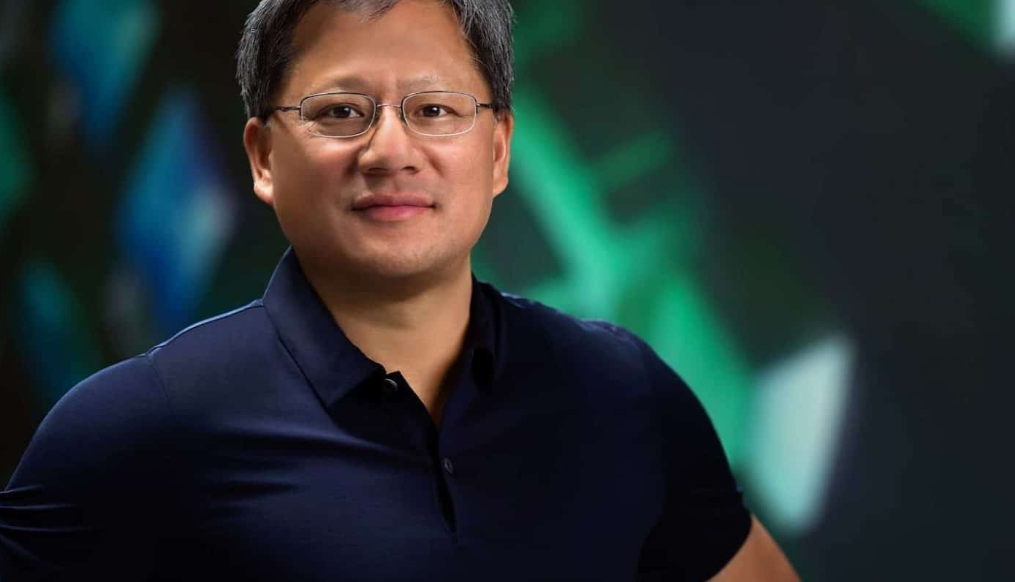
  • The fortune of Jensen Huang, co-founder of Nvidia, has increased from $3 billion to $90 billion in five years.

    The fortune of Jensen Huang, co-founder of Nvidia, has increased from $3 billion to $90 billion in five years.

    MetaTrader, Amazon, or Google… In recent years, Nvidia has surpassed the market capitalization of these three giants and is approaching that of Apple. If there’s one big winner from this dynamism, it’s undoubtedly Jensen Huang, co-founder and CEO of the company. In a single day last Thursday, $7 billion was added to his personal fortune. A sum that has continued to grow since then.

    Like Elon Musk or Bernard Arnault in France, the wealth of this 60-year-old is directly linked to the valuation of his company. Last week’s surge was due to the release of extremely strong quarterly results . Jensen Huang owns 86.76 million shares of Nvidia, representing approximately 3.5% of the outstanding stock. Thanks to artificial intelligence, the value of his shares has increased 28-fold in five years, rising from $3 billion to $90 billion, according to CNBC .

    Nvidia was born in Silicon Valley in 1993 from the minds of young engineers Chris Malachowsky, Curtis Priem, and Jensen Huang. The start-up committed itself to the development of graphics processing units (GPUs), then not very popular, for 3D video games.

    After some initial difficulties, Nvidia established itself as a leading brand for video gamers. Its dominance in AI chips, representing 80% of the global market, was built during the 2000s and 2010s . Nvidia developed its technology in 2007 to enable its GPUs to perform multiple calculations in parallel—a feature now essential for training and operating AI.

    Under Jensen Huang’s leadership, the company fully committed to the then-emerging technology of deep learning in the early 2010s. This gamble paid off with the success of OpenAI’s ChatGPT in late 2022. The AI ​​race boosted Nvidia’s sales. The group’s value tripled in 2023, having already doubled in 2022. This success propelled Jensen Huang’s fortune, placing him among the 20 richest people in the world.

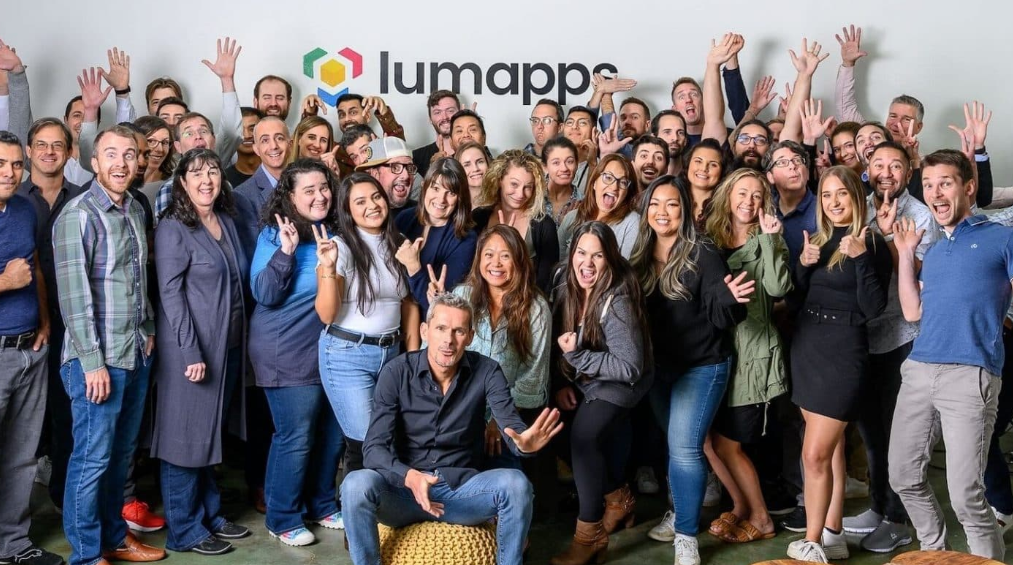
  • Bridgepoint acquires French startup LumApps for $650 million

    Bridgepoint acquires French startup LumApps for $650 million

    British investment fund Bridgepoint has acquired the French flagship company LumApps, according to a press release published on May 27. This is one of the largest deals in the French Tech sector in recent months. Bridgepoint’s objective is clear: to make LumApps a global leader in intranet solutions.

    LumApps, a future giant?

    LumApps is a French startup founded in 2012 and based in Tassin-la-Demi-Lune, near Lyon. It is a software publisher specializing in intranets. From email and calendars to video conferencing and expense reports, the company’s platform aggregates all the business applications needed by employees.

    Around a hundred applications, developed by Microsoft, Google, Salesforce, and Cegid, are supported. The company currently serves 700 businesses and 5 million users, 40% of whom are located in the United States.

    Large corporations such as Veolia, Airbus, and LVMH use its solution. In short, LumApps already enjoys a strong position in the intranet market. For Bridgepoint, this is therefore a good deal.

    The previous shareholders—Goldman Sachs, Eurazeo, Iris Capital, and Bpifrance—have agreed to sell their stakes. Meanwhile, around fifty of the company’s executives are participating in the new transaction, including the CEO, Sébastien Ricard.

    The $650 million acquisition is expected to close in July. Sébastien Ricard, also its founder, explained that ” this is a powerful symbol after our Series A, B and C funding rounds, the acquisition of 4 startups, and achieving profitability .”

    He hopes that ” Bridgepoint will allow us to quickly assert our technological leadership by continuing our R&D, and accelerating our development in Europe, the United States and Japan .”

    Bridgepoint’s resources and portfolio should indeed allow the Lyon-based company to accelerate its development. In 2024, it aims for €80 million in revenue, compared to €33.1 million in 2022. The ultimate goal is to become a unicorn by 2025.

    Bridgepoint continues its expansion on the old continent

    With 350 employees, LumApps plans to recruit 160 to 200 people over the next four years to support its technological development and meet market demands. According to Bridgepoint, this market represents €9 billion and is growing by 15% annually.

    The competition is fierce. But this doesn’t deter the British fund, which aims to make its new company a giant in the sector. Beyond this consideration, LumApps represents a further step in Bridgepoint’s development.

    This is its seventh acquisition. ” By leveraging our strong European presence and expertise, we are delighted to support LumApps in its mission to become the leading employee engagement platform ,” said David Nicault, partner at Bridgepoint.

    The investment firm currently manages €62 billion in assets. It is also behind the recent acquisition of Nexity’s property management business and already has a foothold in the tech sector, notably with Calypso.

    This acquisition also brings a welcome breath of fresh air to a rather gloomy year for European startups. Since the end of the Covid-19 pandemic, inflation and rising interest rates have dampened investor enthusiasm , resulting in a drop in funding.

    Several startups, like Rent A Car, have narrowly avoided disaster. Others, such as Back Market, are much more cautious. Few French Tech companies have been sold for as much as LumApps. It remains to be seen whether this transaction will lead to a return on investment.

  • AWS is investing to strengthen its presence in Europe

    AWS is investing to strengthen its presence in Europe

    Amazon Web Services (AWS), the 
    cloud computing arm of the e-commerce giant, aims to consolidate its position in Italy. To this end, the group is reportedly prepared to invest several billion euros.

    Cloud giants are expanding into Italy

    Discussions with the Italian Ministry of Industry have reportedly already begun, according to exclusive information obtained by Reuters . The size and location of the investment are currently the focus of the talks, with AWS considering expanding its existing site in Milan. The construction of new facilities is also a possibility.

    The company launched its first cloud region in Italy in 2020 as part of a €2 billion investment plan until 2029. It already has a solid customer base including, among others, luxury car manufacturer Ferrari and insurer Assicurazioni Generali.

    That same year, Google struck a landmark deal to provide cloud services to Italy’s largest bank, Intesa Sanpaolo. The Redmond-based company invested nearly €1 billion in the country to establish the two sites on which the bank relies. Also in 2020, Microsoft unveiled a major $1.5 billion investment plan in Italy. Its first cloud region in the country was launched last year.

    A flurry of investments in Europe

    Italy isn’t the only European country coveted by cloud giants. After pausing their cloud spending in 2023, large companies are once again injecting significant sums into the sector. Meanwhile, the boom in generative artificial intelligence (AI) is driving cloud providers to build new data centers, as the technology requires substantial computing power.

    Europe’s situation is also unique. Authorities are calling for the establishment of a sovereign cloud , prioritizing local data storage. Keen to avoid losing market share, companies like Microsoft, Google, and Amazon are investing heavily in Europe to meet this demand.

    In 2022, AWS announced a massive €15.7 billion investment in data centers in Spain. According to Reuters , the amount spent in Italy is not expected to surpass this. For its part, Microsoft revealed this year that new data centers would be built in Germany and then in Spain . At the Choose France summit, held a few weeks ago, both the Redmond-based company and AWS pledged to invest in France , with AI as a key focus.

  • The European regulation aimed at increasing the production of green technologies on the continent is adopted

    The European regulation aimed at increasing the production of green technologies on the continent is adopted

    The European Council approved the Net Zero Industry Act (NZIA) on Monday. Its objective is to reduce greenhouse gas emissions in the European Union (EU), but above all to increase the production of green technologies on the continent.

    This new law aims to produce 40% of the EU’s green technologies by 2030. A total of 19 technologies are covered, including solar, wind, nuclear, and carbon capture. Brussels hopes to reach 15% of global production by 2040.

    Two main measures are needed to achieve these objectives. The first is to simplify and streamline the permitting process for projects in these areas. The second aims to encourage Member States to move beyond purely price-based criteria. They will be able to consider the resilience and sustainability of bids in up to 30% of tenders.

    This is a response to competition from the United States and China in these sectors. With the Inflation Reduction Act (IRA) , the Biden administration has allocated $369 billion in support for green industries over 10 years. This plan carries the risk of encouraging European companies to relocate across the Atlantic.

    For its part, China has dominated the solar panel market for several years. Of the €22.6 billion worth of solar panels imported by the EU, 96% come from China, according to figures published by Le Monde . European manufacturers, the few remaining, supply less than 3% of the continent’s installations. While the situation is better for wind turbines, Chinese companies are also eyeing this market.

    Without funding and relying primarily on incentives, the European regulation appears timid in the face of the challenges ahead. The text must now be ratified by the President of the Parliament and the Council before being published in the Official Journal of the EU in the coming weeks.