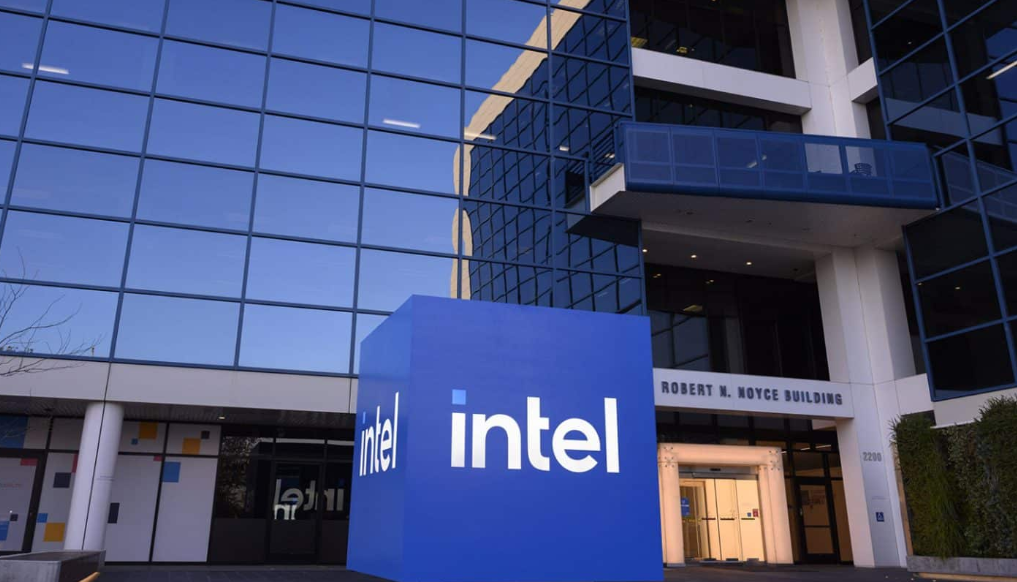
More than any other company, Nvidia has emerged as the undisputed champion of the explosive growth of artificial intelligence. With its GPUs designed for data centers, the company controls 90% of the market. Intel and AMD, far behind, are relegated to vying for second place or competing in niche markets.
Nvidia is head and shoulders above the rest
The race for AI has triggered another, inextricably linked one: the race for data centers. Google , Microsoft , Meta , and others are multiplying infrastructure projects all over the world. For Europe, the International Energy Agency anticipates a 50% increase in the energy consumption of these facilities by 2026. In the United States, energy providers are preparing .
In these data centers, those specializing in AI training and operation, Nvidia reigns supreme . The group’s revenue has tripled in each of the last three quarters. Its data center business alone generated $47.5 billion in 2023. In the first quarter of 2024, that figure had already reached $22.56 billion. The year-over-year increase is 427%.
By comparison, while AMD saw 80% year-over-year growth in its data center sector, it generated $2.34 billion in revenue. Intel’s revenue reached $3.04 billion in the first quarter of 2024.
“ We know that Nvidia is currently the market leader in terms of market share. It’s a fact that they have a dominant market position, ” Andrew Dieckmann, vice president and general manager of AMD’s data center business unit, told Nikkei Asia in an article about this gap. He confirmed that his company’s goal is to become number two.
Intel and AMD are playing their cards
To avoid falling behind in AI chips, both groups are looking for areas where they can gain a foothold. The first is inference. In the field of AI, this refers to the algorithm’s ability to provide relevant answers. This process is extremely energy-intensive , especially for large models.
With their latest Gaudi 3 and MI300X chips, Intel and AMD hope to leverage efficiency to win over businesses. According to Nikkei Asia, they anticipate the need for smaller models in the professional market. This is partly for cost-saving reasons, but also because a large, general-purpose model is less practical than a smaller, specialized one.
Unfortunately, Nvidia is also active in this area. 40% of its 2023 data center revenue is linked to its efforts in the field of inference.
The other area is that of AI accelerators for PCs. AMD and especially Intel fully benefited from the explosion in computer ownership rates a few decades ago. ” We believe that by 2028, 80% of PCs worldwide will be AI-accelerated, ” Robert Hallock, Intel’s vice president and general manager of customer AI and technical marketing, told Nikkei Asia .
The company claims to be ready to ship its PC chips. However, this gamble leaves some observers skeptical. Will the promises of AI PCs be enough to convince customers to adopt them en masse? That seems highly uncertain at present.